Circadia
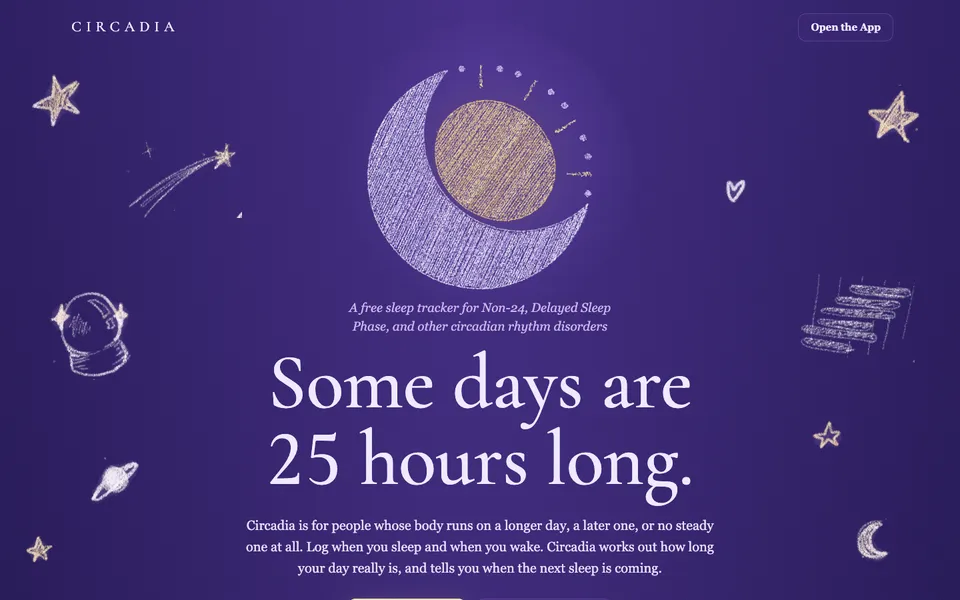
Some days are 25 hours long.
Circadia is a free sleep tracker for Non-24, Delayed Sleep Phase and other circadian rhythm disorders. We design, build and run it, and it has been open to everyone at circadia.owlandkestrel.com since May 13, 2026.
The problem
Sleep apps assume a 24-hour day. For people whose body runs on a longer day, a later one, or no steady one at all, a bedtime reminder at eleven is noise. Circadia's founder has Non-24: “I wanted an app that would let me type in my own sleep and tell me when the next one was coming. None of the ones I tried could do either. So I built one.”
What we built
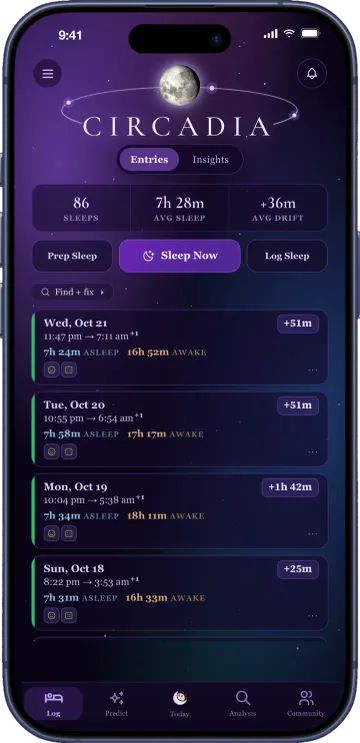
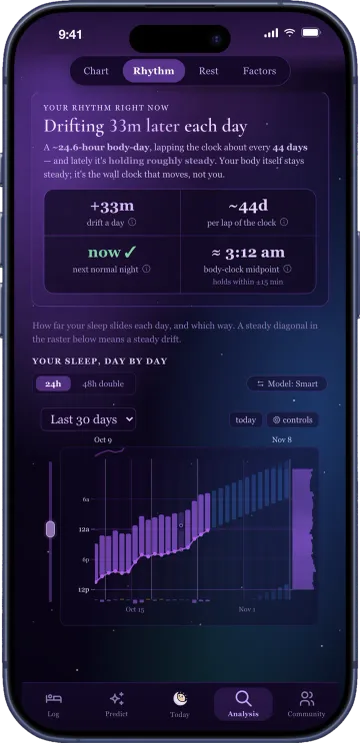
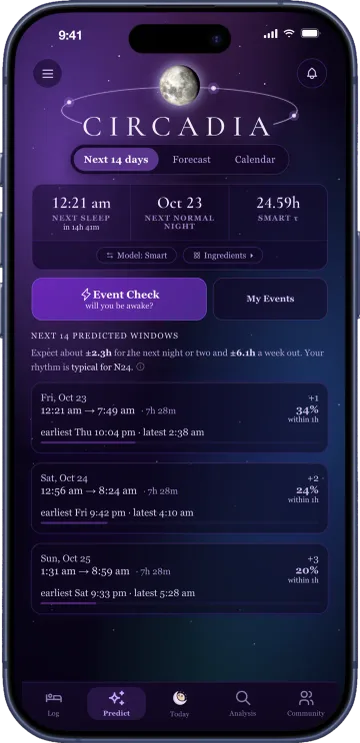
Two taps a day, Sleep Now and Wake Now. From that log Circadia works out the drift and τ, the real length of your day, with more than one estimator and a confidence tier so a number never looks surer than it is. It draws the actogram sleep labs use, forecasts the next sleep windows with two models and grades every forecast afterward against the sleep that happened. A Doctor’s Report PDF gives a clinic a read-only, revocable 90-day view.
How it runs
A web app that installs to a phone: no download, no card. The log stays on the device until you sign in, then syncs across your devices. Twelve import sources, full export and delete. The Adaptive forecast is statistical modelling; there are no generative-AI features, no ads and no tracking in the app.
Built with the people using it
Most of what is in Circadia came from its users: they find the bugs, vote on what comes next and, if they choose, share their logs for research. Sharing is off until each person picks a level, and it can be revoked.
- Open since
- May 13, 2026
- Made for
- Non-24, delayed and advanced sleep phase, ME/CFS, shift work
- Price
- Free core app; optional Circadia Plus subscription
- Published cohort
- 256 sign-ups and 118 people sharing data, as of October 27, 2026
- Team
- Two people